

Merry Christmas – and checking in
Merry Christmas to all, wherever you are in the world, and whether you are celebrating today, or waiting until the Julian calendar comes around.
I am in a reflective mood, and it has been a very long time since I wrote anything on the blog.
In recent years, a lot of my free writing energy has been spent over on Quora, which was introduced to me by a physicist friend as a place where experts could answer questions directly, but has devolved somewhat to a more popular site. Nevertheless, a lot of quality writing can be found there, and I have done my best over the years to provide quality answers to questions on ecumenism, theology, church history and canon law, as well as occasionally weigh in on cultural, geographic, or personality perspectives.
You can peruse some of that here:

Since June 2017, I have answered about 5000 questions, and my contributions have been read by over 6 million people, at a rate of between 50,000 and 90,000 per week – so the impact is significantly higher than any academic writing I have done, or even this blog, which, when active (October 2009 to June 2016), had about 3000 subscribers and never more than 8,000 views in a month.
As I write, I am sitting in my childhood home in the foothills of the Cascades, outside of Seattle, and it has finally started snowing for the first time (for more than a few minutes) this winter. It is a quiet Christmas afternoon, my mother and one brother in the house, at opposite ends.
I have been home from Rome, rather unexpectedly, since August. The pandemic wiped out much of international higher education and study abroad programs in Rome, summer programs, and basically all the work that kept me busy teaching the City, and teaching in the City. I have muddled through with translations and editing, and have turned into more of a couch potato than I should be comfortable with, having gained back all the weight I lost when I moved to Rome all those years ago.
Rome has been home for a dozen years (2009-2021), and nearly tied with my childhood in North Bend (1981-1994) as the longest anywhere. It is not clear at the moment how or when I’ll be back, or where my next place will be, but I was reflecting on some of the numbers of my Roman experience.
Despite the long time calling Rome home, it has hardly been easy or settled. I have had to pack up and move no fewer than 23 times in that period, and considering I was blessed with the stability of one apartment from April 2018 to July 2021, most of that was condensed into even less time. (And each of those moves were for at least a month somewhere, not counting vacations and visits and the like, of course). Moving is exhausting, even when it is only across town or to pack up everything for a summer and have to find lodging outside the academic year.
I have taught 61 university classes since 2013, and helped with two others, for six different universities and higher education institutions. More than most professors by the time they get tenure. But, as with nearly everyone in Rome, remain perpetually adjunct and frequently forgotten about by the main campus, or, as a non-ordained person, not even eligible for permanent positions in some institutions. I have also worked in administrative roles for three different institutions, completed two degrees/diplomas, tackled the doctorate with two different universities and advisors, and studied, researched, or had fellowships at a total of eight different institutions in six different countries.
My average income has been about 21,200 Euro per year (about $24,000), since moving to Rome – including in-kind provisions for room and board at times – which is less than I made as an interim parish youth minster in my first year of ministry almost 20 years ago, not even considering inflation.
I, and my colleagues, received one raise from one university since 2013, and it was not even enough to account for the inflation since I started teaching there – though it was more generous than anyone else has offered. Teaching a class for a university or seminary in Rome can, and has, paid between about 800 euro and 4500 euro per class. The average has been 3000 Euro (gross) per class, meaning about 1900 Euro after taxes, typically. (Which is a rather complicated other subject…)
I have also, because of the lack of funding, support, and stability, had to start and stop and start again a doctorate at two different universities with two different advisors, all of which being done in between the average working more than full time for multiple employers part time and temporarily, often without stability. That looks to be finally finishing up in this coming year, as, in the words of my current advisor, I’ve been “trying to write the entire Oxford Encyclopedia on the Diaconate, rather than a modest 180 page book. Stop trying to change the world and just get your degree.”
I have delivered 43 academic presentations or conference papers, planned and/or staffed 27 academic conferences, participated in 25 additional conferences or symposia, edited one anthology, translated two books and more than 150 articles for six different institutions, and done a terrible job of turning most of that into peer-reviewed publications except for a few book reviews.
I have consulted with Hollywood over a Netflix show (cancelled, unfortunately) and with a couple novelists about their books. I have met two popes, two archbishops of Canterbury, the ecumenical patriarch, and more cardinals than I can shake a stick at. I participated in most of the major papal liturgies of a decade, including the canonizations of some of my heros of the faith: Oscar Romero, Mother Teresa, John XXIII and Paul VI, Kateri Tekakwitha, Andre Bessette, and others.
I have travelled to about 30 countries, spent a semester in Jerusalem, a month or more in Cyprus, Wales, and Greece, met friends from all over the world, and am deeply indebted to the kindness, generosity, and care of a few special people, (C and E, especially, who know who they are, I hope!). Despite challenges, I have had many blessings and many opportunities, and met people I never could have otherwise – and I deeply appreciate the international, intercultural, and interreligious perspective I have benefited from.
Depression and poverty have been the most persistent and overwhelming challenges, though Italian bureaucracy and clericalism both make good showing – I may have to write on those another time. The last year was really one of my hardest, and even those closest and kindest to me were burdened with too much, so I’ve landed home for a spell, and an opportunity to look for new directions or come to terms with the way things are. Keep me in prayer, and especially any of those who I have hurt, failed, or disappointed on the way.
After having consecrated my life to the Church more than 25 years ago and rather naively believing I would therefore have the Church’s support for my vocation, at least enough to not be constantly scrambling for scraps or relying overmuch on friends, family, and relationships just to survive, I am also at a vocational turning point. When I would have been ordained, my bishop then told me I had to choose between presbyterate – and therefore being only a parish pastor – or ecumenism and academic theology, there therefore not being ordained. Ironically, in Rome, I have been told my not being ordained is the main reason I have no position in the Pontifical Councils for Christian Unity or Interreligious Dialogue, or stability in my work, or even that lay people should not study theology, as if we had any brains we would do medicine or law or tech instead to make money.
A friend asked if I was still doing ecumenism anymore. It has literally been a lifetime pursuit and vocation, but after a lifetime of being shunted aside for being lay, or for dedicating first and foremost to this and not something else, and often not even able to receive a basic living from this dedication to the Church, even as much as a simple priest would have, I have begun to question what my direction should be. It is unsettling, and your prayers and ideas and support are welcome.
I welcomed the Francis pontificate with joy, and the hope for reform and forward momentum was rekindled, but the hatred and bile, the dissent and schism that his light has aroused among those who loved the darkness, and seeing something of a parallel in response to the pandemic and the rise of Trump’s cult in the US has also been dismaying. It is hard to hold on to hope, faith, or feel love, in such a climate, even when those closest to me have tried, far above and beyond what is expected.
And yet, all these changes and challenges have brought me home, unexpectedly, with only a little work online, to spend more time with my family, especially my niece and nephews than I have ever had in their young lives. The first time I was ever home for my nieces birthday, or my youngest nephew’s and the first for my oldest nephew (now 14) since he turned one. The first Halloween, Thanksgiving, or St. Nicholas Day with family, in their lives. And while it came at a cost, it was apparently needed, and therefore I thank God.
I ask your prayers as I learn what this all means, as I rediscover graciousness and gratitude and perspective, and for forgiving others even as others work to forgive me. And, in the midst of that, a meaningful way to fulfil my vocation!
Perhaps appropriate then, that we celebrate the Nativity, the Incarnation, the humble birth of our Lord and Savior, Jesus called Christ, as the snow falls here amidst the evergreen trees, and we are reminded that death and sin are conquered, that even the darkest hours merely precede the coming of the Light of the World.

Russell Berrie Fellows – a decade later
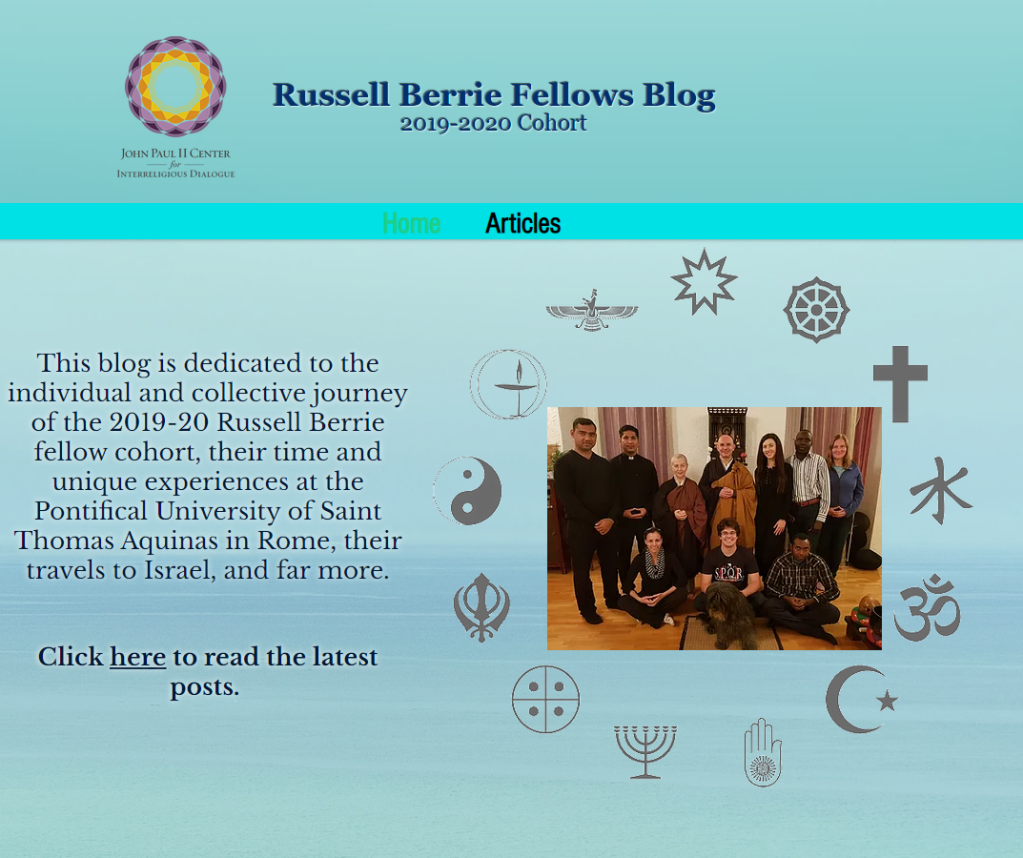
A decade after my arrival in Rome as part of the first internationally recruited cohort of Russell Berrie Fellows in Interreligious Studies, the program was still going, stronger than ever, in fact.
Despite the pandemic, last year’s cohort managed to make the best of their experience, and I just recently came across a blog they prepared.
Prompted me to look up some of the old blog posts I had written about the Fellowship or about our Holy Land Seminar.

There should only be five Italian cardinals
The internationalization of the College of Cardinals is neither new nor unique to Pope Francis, despite the grumbling in some circles about his penchant for going to the peripheries to elevate men to the porporati.
The College of Cardinals evolved out of the clergy of the local Church of Rome, as the Church of Rome and its bishop grew to take on more responsibilities beyond the level of a diocese or metropolitan province, in the early medieval period. There were cardinals from each of the major orders:
The cardinal-deacons had been seven originally, actual deacons, one each as dean of the seven regions of the city, responsible for the supervision of clergy and management of church personnel and resources. This number was raised to fourteen under Gregory the Great, and then four ‘palatine’ or curial deacons were added under Gregory II in the early eighth century, giving a total of eighteen cardinal-deacons. The cardinal-presbyters began with the presbyters of the early tituli, the twenty-five early ‘parishes’ of Rome. About fifty cardinals total, all Roman, by the eighth century. The seven cardinal-bishops were the diocesan bishops of the suffragan “suburbicarian” sees around Rome.
It was not even an institution unique to Rome, as at least in the ninth century, dioceses in general were encouraged to name cardinal clergy from the ranks. It is no surprise then that the cardinals were originally Italian, specifically Roman, and that this remained the norm for centuries.
As early as 975, however, we see the first non-Roman being named a cardinal of the Roman Church, when Archbishop Dietrich of Trier is named cardinal-presbyter of Santi Quattro Coronati on the Caelian hill. Within a couple of centuries, it becomes acceptable to appoint cardinals from outside of Rome without any requirement of residency, and the practice of titular churches for cardinals emerges clearly.
While the total number of cardinals evolved over the centuries, it rarely exceeded thirty after the thirteenth century and was formally limited to twenty in the fourteenth. The Council of Basel expanded it to two dozen, and it is about this time that the appointment of non-Italians becomes routine, if still limited. It is Leo X di Medici, famous for his excommunication of Luther and his lavish lifestyle, who dramatically expanded the Sacred College, to a total of sixty-five. Only ten of the forty-five cardinals created by Leo were non-Italian (mostly French), so the Italian majority grew and did not diminish for centuries. By the end of the tumultuous sixteenth century, the limit was fixed at seventy, where it remained until the twentieth century.
Despite the call of the Council of Trent (1545-63) to internationalize the college, the Italian majority remained solidly unaffected until the modern era. At the beginning of the twentieth century, 56% of the cardinals were Italian. It was Pius XII who was the first champion of internationalization. After World War II, Pius held the largest consistory since Leo X in 1517. Thirty-two new cardinals were created in 1946, only two of whom were Italians. By the time of the conclave to elect his successor, in 1958, Italians were only 36% of the college.
Pius XII’s successors from John XXIII to John Paul II continued the trend of internationalization. The Italian representation among the college dropped from 35-36% under Pius and John, to 23% under Paul VI, and 17% under John Paul II.
Benedict XVI reversed this trend. By the end of his pontificate in 2013, he had re-Italianized the college to the level it had been in 1978, undoing the internationalization efforts of his sainted predecessor from Poland.
Today, after Francis’ six consistories, we stand at an Italian presence of 18% (both among the electors only and the total). Perhaps on the next consistory will we will finally be back to the level of internationalization we last saw in 2005. He has so far been able to offer a corrective to Benedict’s Italianization, but has not yet made any advancement in the internationalization from that point. What he has achieved is a greater diversity of that internationalization, like Pius XII, reaching out to countries who had never seen a cardinal to call them to the college.
Why does it matter? Only 4% of the global Catholic population is in Italy. At a similar rate, no more than five cardinal-electors should be Italians. Europe as a whole is overrepresented, with 42% of the cardinal-electors but only 21% of the world’s Catholic population, but almost the entirety of that excess is with the twenty superfluous Italian electors.
The College of Cardinals is not, of course, a directly representational body. But it is representative of the universal church, responsible for aiding the bishop of Rome in his responsibility as presider of a global communion of Christians. It should therefore reflect the reality it represents and is responsible for, if not slavishly, at least the demographic of the Church should be a model reflected in the Sacred College as a microcosm of the greater whole.
While North America and Asia are about par between global and cardinalatial distribution, Africa is slightly underrepresented and Oceana slightly overrepresented. The dramatic shift would have to be from Europe to South America. Especially from Italy to Brazil. With two and a half times as many Catholics as Italy, Brazil currently has four cardinal-electors to Italy’s twenty-five. It should have a dozen or more. Half the world’s Catholics live in the western hemisphere, yet less than a third of the cardinals come from there. It is time to balance the scales, in accord with the wishes of the Councils of Trent and Vatican II, and the actions of every pope (save one) since World War II.

The Viganò letter: first read
Viganò must be taken with a large grain of salt – it becomes clear he is ideologically driven and fixated on homosexuality – which is not the core issue here, though it has its place.
He also gets a few facts wrong, to support this ideology. For example, he claims 80% of abuse is of a homosexual nature. This is untrue. If you look at the most comprehensive study to date, and at the people doing the abuse the breakdown is this: 45% homosexual abuse of teens or vulnerable adults, 33% heterosexual abuse of teens or vulnerable adults, 22% pedophile abuse of children.{1}
His tone develops from factual and well-reasoned to one of taking advantage of the crisis to smear names that don’t deserve it (e.g., Cupich is “ostensibly arrogant”?? Francis had a ‘deceitful way’?? BS). Some of the cardinals he seems to list for no other reason than that they were appointed by Francis, and Francis he imposes sneering and snide comments on without justification.
He was unhappy with his job placement, and has a mixed record. He has personally tried to quash an investigation into a bishop who facilitated and covered up abuse, that whole Kim Davis meets the pope debacle, and a number of other moments. (Which alone does not mean we should dismiss everything he has to say, but acknowledge that it is not at all an objective or proven claim).
When asked to provide proof for his claims, he responded with “silence and prayer.”
But if you can keep all that in mind, that he names names and shares what he knows (even if it is tainted by his bias) is nearly a good example. The dirty laundry must be aired in order to be cleaned. But it would have been better had he stuck to facts rather than gossip, innuendo, and whining.
It becomes clear at least, from this and other sources, that:
a) John Paul II so utterly failed in this issue, and/or was sufficiently incompetent to serve in his office, by 2000, that he is basically a non-factor – but not in an excusable way. The worst of the abuse and the cover up happened on his watch – and one could easily suspect that the reason his canonization was rushed was to avoid this all coming to light before that happened;
b) Benedict may or may not have acted regarding McCarrick, but if he did, he did so secretly and late, and this is the crux of the problem. What good are ‘sanctions’ if no one knows about them? Benedict’s record on abusive priests was good as pope, but with regard to bishops and cardinals he did nothing. Another fail.
c) Francis is loyal to his friends to a fault, and just telling him about someone (Barros, McCarrick) is not enough, without evidence or clear first-hand testimony. This too is a failure.
d) Viganò’s ire seems motivated by other reasons. As a schemer, he sees scheming behind everything, even if it isn’t there. His wholesale attack on Francis and everyone connected to him is not justified by the facts he presents earlier, but there are some legitimate questions raised. The pope resigning is not one of them.
e) There is a whole list of curial cardinals and other bishops who ought to go. Just maybe not the whole list Vigano complains about, since some of his assertions are little more than gossip and retribution, the rest are documented and valid. It would be better had he not mixed the two.
He names a dozen people who should have known, by virtue of their office, of these sanctions – none of whom have confirmed Viganò’s account.
Some appear serious and well-founded: Bertone, Bootkoski, Myers, Sambi, Sodano, Wuerl.
Most seem just to be speculation at best, and ideological mudslinging at worst. These probably should have been left out entirely, if he wanted to be taken as a straight shooter: Coccopalmerio, Paglia, O’Brien, Martino, Farrell, O’Malley, Cupich, Tobin, Martin.
To that end, yes, there should be an investigation into the McCarrick affair, into the US bishops broadly, and into Viganò.
It is after all the pope – as well as the People of God – who have been asking for honesty, transparency, and reform. This kind of ideologically driven rant does not help, but it does not mean that there is not something worth including in an investigation here.
Popes and abuser-cardinals
August is normally a quiet month in Rome.
A month ago today, Pope Francis accepted the resignation of Theodore McCarrick, 88, from the college of cardinals. And that was merely the beginning.
This was a first: No pope – none – has removed a cardinal for reasons related to the sex abuse scandal in recent memory, if ever. Compare Francis’ two immediate predecessors:
When it became known in 2013 that Cardinal Keith O’Brien (Scotland) was found, like McCarrick, to have engaged throughout the 1980s-90s in the abuse of power, sexual misconduct, and sexual assault of adults under his authority, Pope Benedict (who would announce his retirement a few days later) finally accepted his retirement as archbishop, and allowed him to go on retreat for a period of “spiritual renewal, prayer and penance”. Ostensibly on his own volition, O’Brien choose not to participate in the conclave the following month, but there is no indication that there were any sanctions imposed on him as a cardinal by Benedict.
Only after Francis was elected was a visitation and investigation initiated – again, something unprecedented – and when the results of the investigation landed on Francis’ desk, O’Brien was he relieved of the “rights and duties” of a cardinal, though he still remained a cardinal, entitled to dress and be addressed as such. It was a bizarre half measure, some attest to Benedict’s intercession.
When Cardinal Bernard Law was found to have covered-up sexual abuse by priests in Boston for years, and his resignation from that post eventually accepted, Pope John Paul II gave him an honorary post as cardinal-archpriest of the Basilica of Santa Maria Maggiore in Rome and allowed him all the rights and duties of cardinal, with a great deal of influence in the Roman curia for several years to come. Benedict did not change this, allowing him to continue unabated until retiring at the age of 80 from these roles.
We can only imagine how many other cases there have been without any public action on the part of popes at all.
Now comes this letter of former nuncio to the U.S., Archbishop Viganò, claiming, among many other things, that Pope Benedict had in fact placed McCarrick on some kind of (double secret) suspension, but that Pope Francis had allowed McCarrick freedom again, and for this reason he should resign. (More on that later).
Pope emeritus Benedict has not, as of this writing, said anything about them, nor has Pietro Sambi, who was apparently responsible for communicating them to McCarrick. Pope Francis apparently trusts our ability to read critically enough to see Viganò’s letter for what it is, and no more.
Viganò claims that “the Cardinal was to leave the seminary where he was living, he was forbidden to celebrate [Mass] in public, to participate in public meetings, to give lectures, to travel,with the obligation of dedicating himself to a life of prayer and penance.”
It seems unlikely that there were any such restrictions, except perhaps the request to move out of the seminary.
First, if such sanction existed, the failure to make them public would be a grave scandal in itself. “Secret” laws are no law at all, and one of the issues at the heart of this ongoing scandal is the lack of transparency. In which case, yes a pope would be morally at fault for failing to act appropriately, and for covering up knowledge of an abuser. But that pope would be Benedict, not Francis.
It does not stretch the imagination much to think that the old guard would have thought this an acceptable solution: McCarrick was elderly, no longer a threat, and already retired both as archbishop and on curial dicasteries. Let him meet his maker without another public scandal. Very Romanità. Very much the kind of thing Francis has decried since the beginning.
Even if this were the way it played out, wrong though it might be, that would not be reason enough for Benedict to resign (though he eventually did). It would be reason to confess his error, correct it, and never do it again. It certainly is not a reason for Francis to resign.
But Ockham’s Razor suggests that most likely, there never were any formal sanctions. Certainly, both Pope Benedict and Viganò “violated” these sanctions if there were, concelebrating mass with McCarrick, being at public events with him, and saying and doing nothing about it.
What is more likely is simply that McCarrick was told to sell his beach house and stop spending summer vacations there with seminarians (done in 2000) and then, in retirement, not to reside in the seminary. Which he did. And that’s about it, as far as ‘sanctions’ seem to have gone, until Pope Francis acted.
The culture of secrecy that pervaded the Church up to and including the papacy of John Paul II, only slowly began to crumble under Benedict XVI, and finally being torn away by Francis, is part of the clericalism that allowed this filth to spread thoroughly through the House of God.
As with any serious housecleaning, things get messier before they get organized, the dirt becomes more visible – but you don’t blame the cleaner! As with anyone shining the light of Truth into dark corners, those who prefer the darkness will do anything to put out the light.
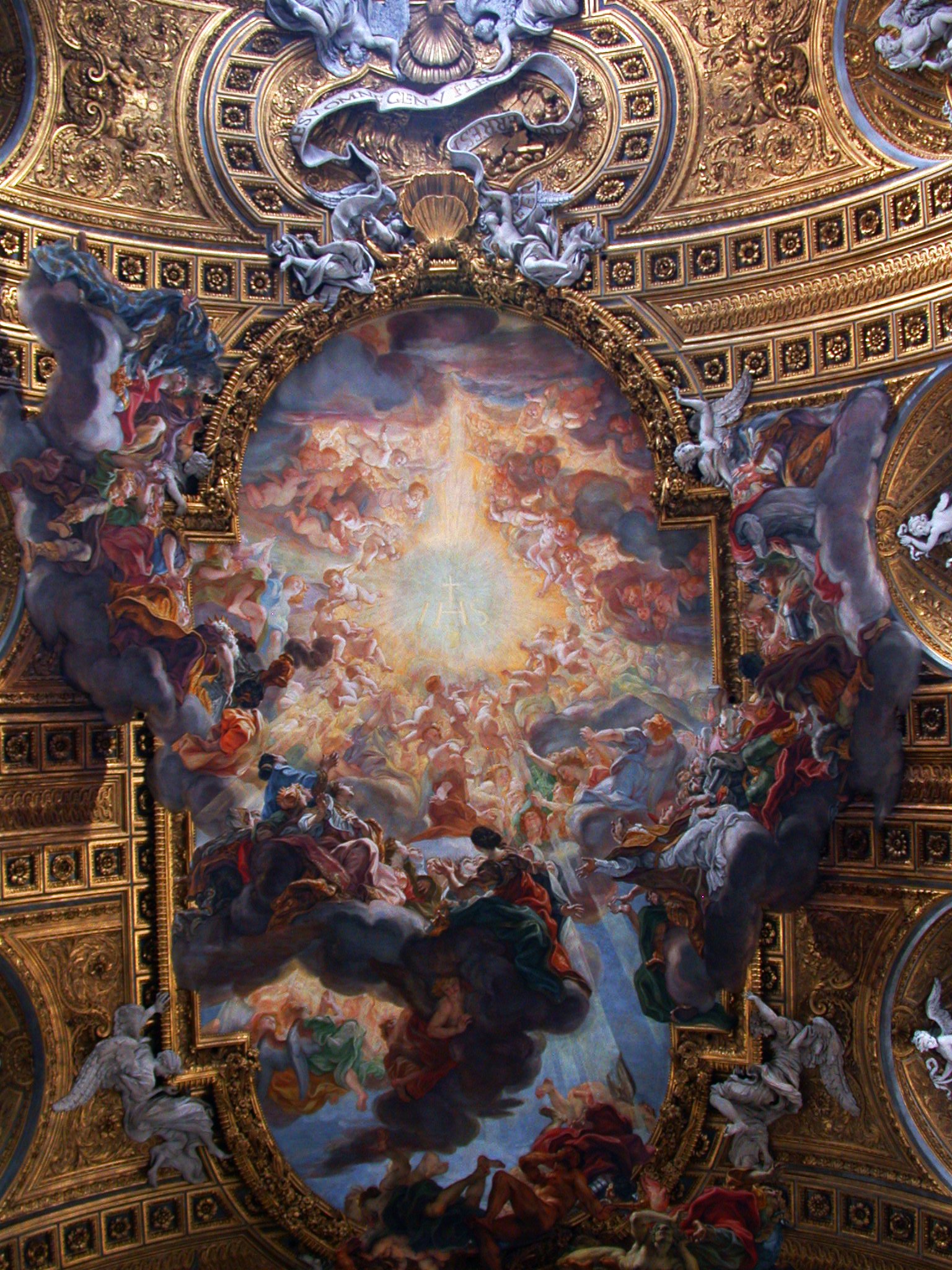
And this is the judgment, that the light has come into the world, and people loved darkness rather than light because their deeds were evil. John 3:19

What Happened to the Dialogue between Rome and the SSPX?
As an ecumenist i encounter a lot of confusion about the status of the Society of St. Pius X. Though no more in full communion with the Catholic Church than the old Catholics, the Anglicans, or the Orthodox, perpetual rumors and misinformation abound because of the presence of so many in the fifth column of Radical Traditionalist Catholics nominally in the Church. This sums it up well.

This post has been a long time coming. It recounts much of what ought to be clear to the careful observer, but since it runs contrary to the popular narrative this documentation is in order. I wish to put to rest the fatuous misrepresentations of the dialogue between Rome and the Society of St. Pius X.
My account is by no means complete, but neither does it omit the pertinent facts. A separate analysis could be devoted to the various nuances of positions represented within the Society. The Society is by no means a homogeneous group and admits of degrees of intensity in regard to the “hardline.” It is certainly true that there was more sympathy within the Society towards the Pope Benedict’s efforts at reconciliation than was often manifested in the media. However, for several reasons, I do not think it is necessary to attend to these nuances in order to bring to light the aspects…
View original post 2,228 more words
40th Birthday Fundraising
 As my 40th birthday approaches, as for many people, it has become a time for reflection on what I have achieved and how I have lived my life so far.
One thing that has been on my mind has been this: As someone who committed to a life of serving the Church at the age of 17, and never really having worked outside the Church in my entire adult life, I accepted early that I would never become wealthy, and that never really bothered me. I figured as long as I devoted myself to ministry, at least my basic needs would be taken care of, and my only real material vices are books – and travel, especially the ability to visit friends and family on occasion.
I have been blessed with many opportunities and experiences. I have donated a wealth of time and talent to the Church and the community – but one regret, you might say, I have in choosing the life of a theologian and minister is that I have never had the means to be quite as financially generous as I would like. Particularly for those organizations from which I benefited in my formative years, or whose work I support and admire in my own modest way, I wanted to give a little back, with your help.
As I started to think about how to do this, Facebook started its fundraiser pages. While not quite as flexible as I dreamed, it certainly seems one of the easiest ways to go. My thought is simple – possibly naively so, but I hope in its simplicity there is broad appeal.
I am picking a dozen causes in a variety of areas that have played a role in my life at some point in the last forty years, either directly or indirectly, and which I would like to ‘give’ something more than my usual very modest amount.
$1000 to €1000 per cause seems like an entirely doable and meaningful, though still modest, amount. Too much for me alone (my entire rent and food budget!), but not too much when spread over a couple dozen – or more – of nearly 2000 Facebook friends, other colleagues, friends, acquaintances and strangers on the street.
Symbolically, I hope that people would consider a donation of 40 somethings in honor of my 40th birthday – whether Dollars or Euros or Pounds or Bitcoin is up to you, but I am thinking about what one might spend on a nice dinner out or a birthday gift for a friend as a model.
As for the causes, I will roll out one each month with specifics of both what program within each organization I am supporting, if applicable, and why it is important to me. My initial brainstorm gave me a few dozen possible causes, but I have narrowed it down, almost, to a dozen – one for each month of my 40th year. (Though, recommendations and reminders still welcome).
My March 2018 cause: Scouting. Donate here.
List of causes/organizations for the year:
Education:
- Citizens for Better Schools Foundation, Snoqualmie Valley School District
- University of Notre Dame
– Financial Aid; Office of Student Enrichment Opportunity Fund - International Dominican Foundation
– supporting the Angelicum, Ecole Biblique, and Dominican Institute for Oriental Studies
Scouting, international:
- Transatlantic Council BSA
-James West Fellowship, Council Endowment Fund,or - Scouting World Friendship Fund
Church:
- Catholic Relief Services/Caritas Internationalis
- Archdiocese of Seattle,
– vocations / lay ecclesial ministry formation
Christians in Middle East:
- Catholic Near-East Welfare Association
- Equestrian Order of the Holy Sepulcher of Jerusalem, or
- St. James Vicariate for Hebrew Speaking Catholics
Ecumenism:
Rome
- Community Sant’Egidio Humanitarian Corridors
(deals with Refugees and Human Trafficking) - Office of Papal Charities – Papal Almoner
Week of Prayer for Christian Unity 2018
For years, I collected and collated the calendar for the celebrations during the Week of Prayer for Christian Unity here in Rome. Thankfully, Churches Together in Rome has taken up the task this year! Here are the events we know of; probably, there are others. Please let me know and I can add them.
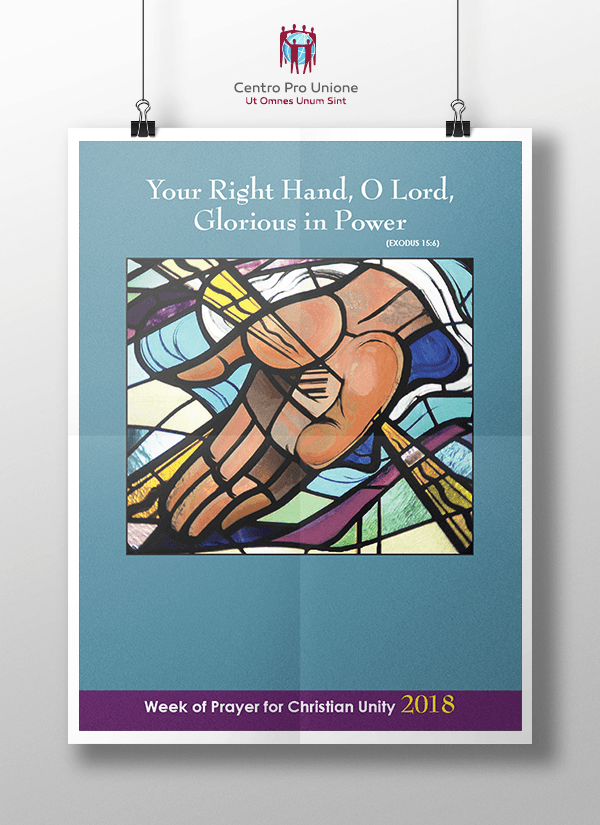
WEEK OF PRAYER FOR CHRISTIAN UNITY : 18 to 25 JANUARY 2018
Thursday 18th
16.30 An afternoon of prayer and reflection,
with an address by Mgr. Paul Mc Partlan, on
“Chieti and the Trajectory of Orthodox-Catholic Dialogue”,
followed by an Ecumenical Celebration of the Word:
Presider: Rev. Tony Currer (PCPCU); Preacher: Rev. Ruth Frampton (Salcombe England).
At Centro Pro Unione, via Santa Maria dell’Anima, 30, 1st Floor (Piazza Navona)
18.00 Evensong (Evening Prayer) with the Anglican community of All Saints
at the Papal Basilica of St. Paul’s Outside the Walls.
Presider: Rev. Jonathan Boardman
Friday 19th
18.00 Evening Prayer with the Evangelical Lutheran community of Rome.
At St. Paul’s Outside the Walls. Presider: Rev Jens-Martin Kruse
Saturday 20th
17.00 First Vespers at St. Paul’s Outside the Walls
18.00 Vigil mass at St. Paul’s Outside the Walls
Sunday 21st
10.30 Morning service at Ponte Sant` Angelo Methodist Church
Preacher: the Most Rev. Bernard Ntahoturi, the new
Director of the Anglican Centre
11.00 Eucharist at Caravita (Oratory of St Francis Xavier).
Preacher: Rev. Dr. Tim Macquiban,
Director of the Methodist Ecumenical Office Rome
17.00 Churches Together in Rome service at St. Patrick’s
(American Catholic Parish, Via Boncompagni, 31),
Rev. Tony Currer, Pontifical Council for Promoting Christian Unity.
18.00 Mass (Basilica Polyphonic Choir) at St Paul’s Without the Walls
Monday 22nd
18.00 Evening service at St. Paul’s Outside the Walls
led by the Methodist Community in Rome.
Presider: Rev. Dr. Tim Macquiban
18.30 Christian Unity Service, Diocese of Rome/Vicariate for the City
With Walk of Witness from Piazza di Spagna to S. Andrea della Fratte.
Tuesday 23rd
16.00 to 18.30 Communion in growth: Declaration on the Church, Eucharist, and Ministry – A report from the Lutheran- Catholic Dialogue Commission for Finland,
Presentations by: Bishops Teemu Sippo and Simo Peura
Rev. Dr. Raimo Goyarrola and Rev. Dr. Tomi Karttunen
Rev. Dr. James F. Puglisi; Thanksgiving for the Dialogue: Kurt Cardinal KOCH
At Centro Pro Unione
17.45 Evening Liturgy St. Paul’s Outside the Walls led by the Romanian
Orthodox community. President: Bishop Siluan
Thursday 25th
17.00 Papal Vespers at St. Paul’s Outside the Walls
(ticket only – apply through your local churches)
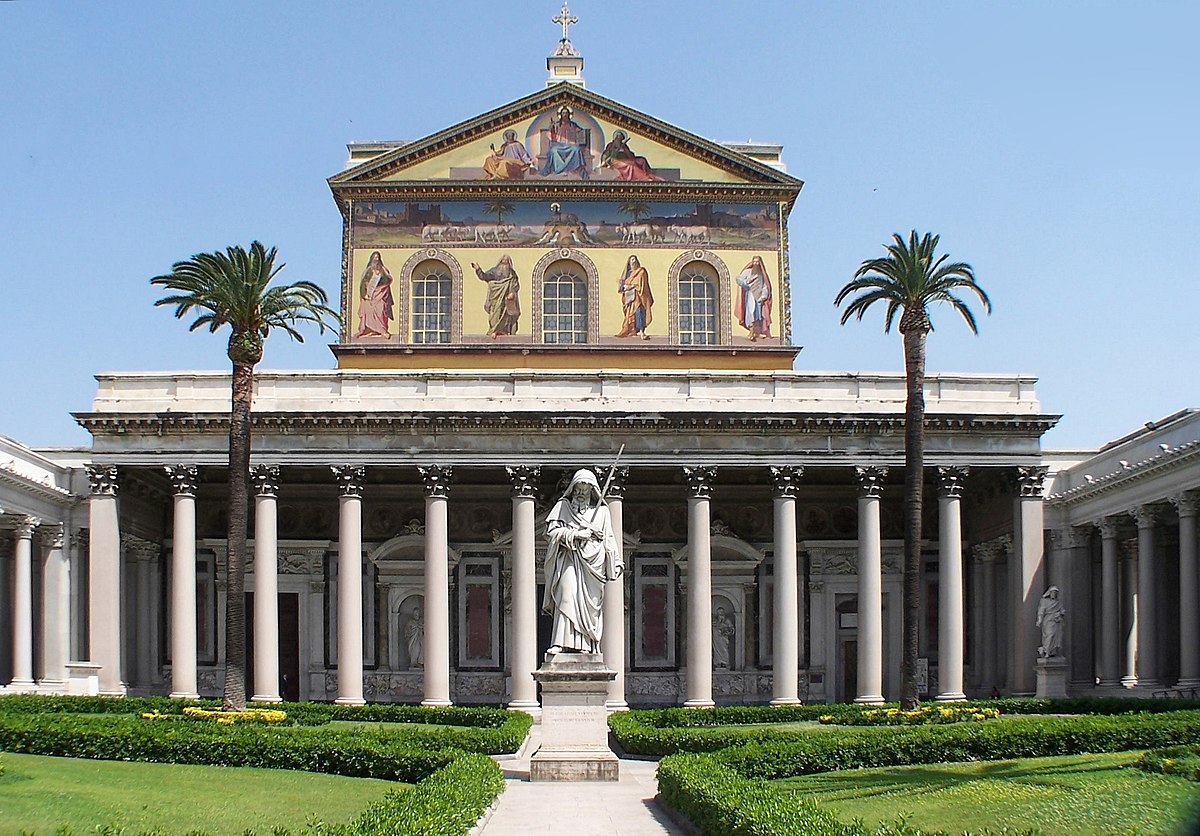
Papal Major Basilica of St. Paul’s Outside the Walls
No ‘faithful Catholic’ thinks the pope is a heretic.
Some thoughts in response to the claim that,
“…for months now we’ve heard how faithful Catholics, looking for clarification from the See of Peter, are schismatics, or an “rad-trads”, an insignificant minority of nobodies… a fringe that isn’t worth responding.”
And, in general, to all related topics.
To be clear, it is not the asking of questions that is labelled “radical traditionalist”, “schismatic”, or an “insignificant minority fringe”. Neither is it faithful Catholics…
The only people being called schismatic are schismatic. Causing division in the church is schism. Promoting it is schismatic. Being a member of a schismatic sect,¹ like the SSPX, is schismatic. Granted, they are in real but imperfect communion, like Protestants, or Old Catholics, or Anglicans – being in schism does not mean completely cut out of the Church of Christ as some seem to think – but when you actively divide the church, that is schism. Call a spade a spade.
The voices that proclaim the pope a heretic *are* a radical fringe. Not of “nobodies”, but then nobody said that they were. It is not, however, a mainstream Catholic view. It is not even a view that can be labelled “conservative” or “traditional” or “orthodox”. It would be a disservice to many faithful Catholics who identify themselves as any of these things to lump them in with the small number of folks so accusing the pope.
For most Catholics, Pope Francis is the first in decades actually speaking a language they find very clear. John Paul II was great with imagery, with stage presence, but his writing was dense, everything wrapped up in layers of personalism or phenomenology. Benedict was brilliant, and as a theologian I loved how much more clear he was than JPII, but it was not the language of most Catholics.
Francis speaks to most Catholics, and has the greatest clarity of the set. The only “confusion” has been created not by him, but by his critics, or perhaps by their rather poor formation either in the development of doctrine, the hierarchy of truths, or moral theology in general. Certainly in ecclesiology.
In fact, it is precisely the idea that we must be open enough to dialogue, to engage a variety of traditions, and even to accept that there is not always a centralized, universal answer to everything that is the hallmark of not only Francis, but the broad swath of faithful who do not identify with the radical fringes – whether “radical traditionalism” or “radical feminism” or “radical ecology” or whatever.
People critiquing a papal document, or, in the case of AL, a papal-synodal document, is also a hallmark of this tradition – of a great Catholic tradition of dialogue, of the great both/and – rather than that of fundamentalism. But, the question is, how do you tolerate the intolerant, or dialogue with those who refuse dialogue?
If there are any honest critics of Pope Francis, let them disassociate themselves from the radical fringe of sedevecantism, SSPX, or calling the pope a heretic. Let them disassociate from deliberately dishonest media like Church Militant or LifeSite News, who seemingly exist only to agitate against the Church, under false pretenses, like wolves in sheep’s clothing.
For St. Peter’s sake, let them stop hammering on about the dubia. In what papacy has anyone ever demanded the pope answer dubia? At what time has anyone, with any other pope, been so arrogant as to think they had the right to do so? For that matter, it has barely been a year since the dubia were submitted – when was the last time anyone in the Vatican answered dubia in less time than that? The lack of respect for the bishop of Rome is breathtaking.
It is one thing to say, “this is unclear” or “I do not understand this”, another to say, “because this is unclear, only the pope can clarify it, and he must do so on my timetable” or “because i do not understand, it must be heresy”.
It is one thing to ask questions, engage in debate, and have dialogue – it is something else to foment discord, deliberately spread confusion, encourage disrespect of the magisterium, and threaten to divide the Church.
“Faithful Catholics” do not do these things.
¹Sect: a religious group that has [recently] separated from a larger religion and is considered to have extreme or unusual beliefs or customs. (Cambridge English Dictionary)
The sect is a more exclusive and ascetic group characterized by separatism from the world and often defiance of it, exclusiveness in social composition and in attitude, emphasis upon a conversion experience previous to membership, and voluntary election or joining. (Blackwell Dictionary of the Sociology of Religion)
Catholic Church in Mongolia
I received this email – as did many others – from a priest-colleague in Rome. I thought it was fascinating and am sharing here, but redacting some personal details for privacy.
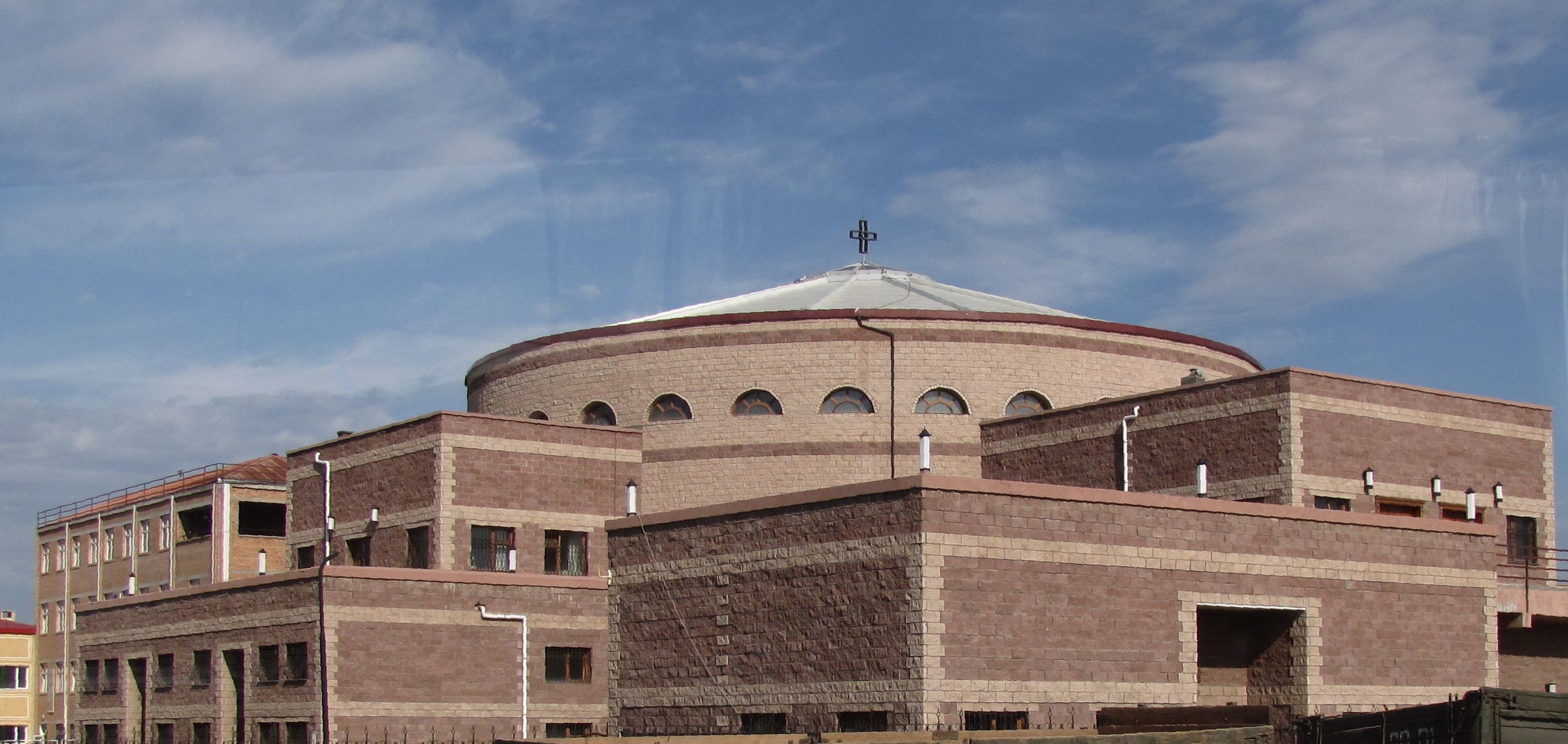
Cathedral of Sts. Peter and Paul, Ulaan Baatar, Mongolia. source: WikimediaCommons
7 July 2017
I arrived here in Ulaan Baatar last evening to participate in the 25th anniversary celebration of the Church’s presence in Mongolia, and I invite you to join with us in prayer and thanksgiving on Sunday for all that God has accomplished here.
With the collapse of communism in 1992, it was Pope St. John Paul II who recognized the fertile ground for evangelisation in this land, and asked the Superior General of the Congregation of the Immaculate Heart of Mary (CICM) to send several misssionaries. Four arrived, one of whom was a young Filipino priest who had worked for ten years in Taiwan, now Bishop Wenceslao Padilla, current Apostolic Prefect of the Mission.
I have been associated with the Church in Mongolia since 2002, and was named a “Partner in the Mission” by the Bishop in 2007. When I first visited, there were 186 Catholics. Today there are more than 1300, with 79 missionaries 45 of whom are religious women, including members of the Congregation of Jesus. There are now seven parishes in the country: four here in the Capital and three others in more remote parts of the countryside.
The Mongolian Church has grown largely because of the “works of mercy” with which it is involved: outreach to the poor, the sick, the elderly, the homeless, the addicted- and now also in the education of youth. There is also strong collaboration with the Buddhist Community here as well as good relations with other Christian denominations.
As I said to a bishop (then the U.S. Bishops’ Representative to the Federation of Asian Bishops Conferences), as our plane took off after our first visit here in 2002: “Seeing all that I have seen here, it makes one very proud to be a Catholic.” My admiration of the Church’s witness and ministry here has only grown on my return visits these past fifteen years.
We congratulate Bishop Padilla and the Church in Mongolia on their 25th anniversary, and pray that God abundantly bless its bright future.
Today is also the day for presidential elections, so we pray, as well, for the People of Mongolia and for its soon to be elected government.
Latest Posts
-
Merry Christmas – and checking in
Merry Christmas to all, wherever you are in the world, and whether you are celebrating today, or waiting until the Julian calendar comes around. I…
-
Russell Berrie Fellows – a decade later
A decade after my arrival in Rome as part of the first internationally recruited cohort of Russell Berrie Fellows in Interreligious Studies, the program was…
-
There should only be five Italian cardinals
The internationalization of the College of Cardinals is neither new nor unique to Pope Francis, despite the grumbling in some circles about his penchant for…
-
The Viganò letter: first read
Viganò must be taken with a large grain of salt – it becomes clear he is ideologically driven and fixated on homosexuality – which is…
 The Ecumenism Blog